Having Plants Isn't the Same as Having a Plant System

A trip to the garden center and a free Saturday afternoon can get plants into your space. What it can't do is get you a plant system, one where every plant is scaled to its room, placed with real dimensions in mind, and designed around the people who actually spend their day in that space.
That's the gap we see most often in offices and homes around Grand Rapids. Someone puts together a well-intentioned DIY setup. It looks good for a few weeks. Then it starts to unravel, not because the plants weren't cared for, but because they were never really designed for the space or the people in it to begin with.
Plants vs. a Plant System
Here's the distinction that matters: buying plants is a shopping decision. Designing a plant system is more of a design and performance decision, and at the center of that decision are the people who live and work in the space.
A shopping decision asks, "Do I like this plant?" A design decision asks a longer list of questions. What are the actual dimensions of this space? What's the ceiling height, the sightlines, the scale of the furniture already in the room? What should someone feel when they walk in, and what's the plant's job in creating that? Will this species actually perform in this light, this airflow, this level of traffic, for years, not just for the first few weeks? And underneath all of it: how does this help the people in this room feel a little more connected to something alive, a little calmer, a little more at ease in a space built mostly of drywall and glass?
That's the approach we take at Foster Spaces. We're not designing plants into a room. We're designing with the people who use that room in mind, connecting them and the space itself back to nature. It's the piece that's easy to miss when a space just has plants sitting in it rather than a system designed around the people it's meant to serve.
Where a DIY Setup Usually Falls Short
Scale and proportion get overlooked. A plant that's the wrong size for its container, or a container that's the wrong size for the room, throws off the whole composition, even if every individual plant is perfectly healthy. This is a measurement problem, not a watering problem.
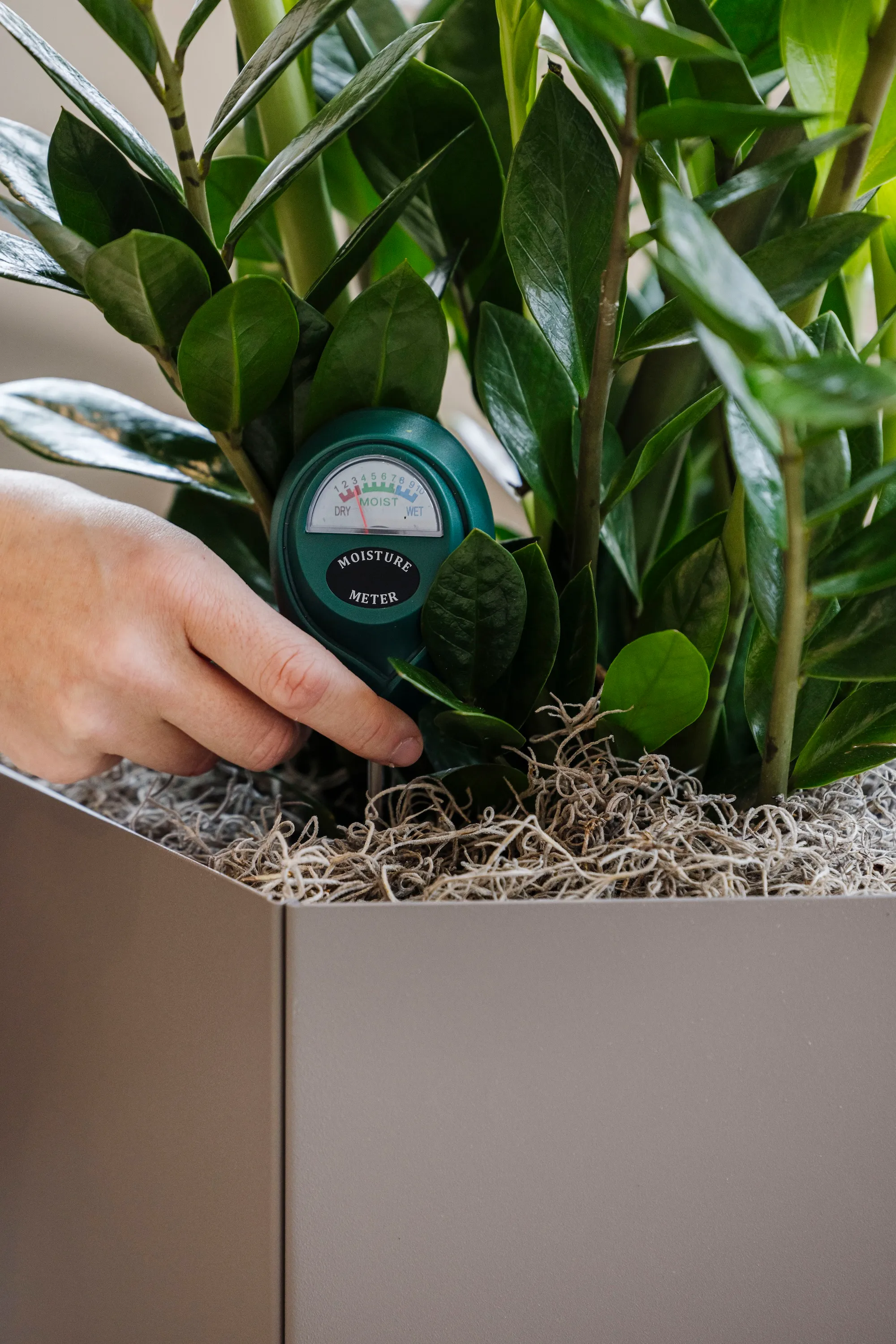
Plants get chosen for looks, not for the light and conditions of the space. Light levels, humidity, airflow, and temperature all determine whether a plant will actually thrive somewhere. A plant that needs bright indirect light will slowly decline in a dim interior hallway no matter how well it's watered.
Placement fights the plant instead of supporting it. Positioning something too close to a heating vent or in direct afternoon sun can cause wilting or leaf burn within days, even with otherwise good care.
There's no cohesive design, just a collection of individual choices. A few nice plants scattered through a space don't add up to a designed environment the way a considered plan does, one where placement, scale, and species work together on purpose.
What an Interior Plant Designer Actually Adds
Measurements and dimensions, not guesswork. Before a single plant is chosen, we look at the actual scale of the space, ceiling height, sightlines, furniture proportions, so every piece is sized correctly for where it's going.
Species matched to real conditions. We assess light, humidity, and layout before recommending anything, rather than picking whatever looks good on a shelf.
Beautiful composition. Placement considers how the space is experienced, what a visitor sees and feels first, how the eye and the body move through a room, and how the greenery supports the brand or feeling the space is going for.
Wellbeing built into the plan. Every choice, from species to placement, is made with the people who'll actually spend time in that space in mind, so the environment does real work for how they feel, not just how it photographs.
Design built to hold up as plants grow. Strategic placement accounts for growth patterns and airflow so the space still looks intentional a year later, not just on install day.
Care that continues after the design is installed. The real value of a designed plant system shows up in month six, not week one, when routine care keeps the composition looking the way it was designed to.
Who Benefits Most from a Real Plant System
Offices and shared workspaces get an environment that feels genuinely designed, not decorated, and one their people feel better working in, without adding another task to anyone's plate. Retail spaces and hospitality businesses get a stronger, more intentional first impression for every customer who walks through the door. Homeowners get greenery that's actually scaled and styled for their space, and for how they want to feel living in it, not just placed in whatever corner had room.
The Smarter Path to a Space That Feels Alive
A single low-maintenance plant on a desk doesn't need a design process behind it. A full office, lobby, or home environment does. The hidden costs of skipping that process (in time, money, and how the space actually reads) usually outweigh whatever was saved upfront.
At Foster Spaces, we design, install, and maintain plant systems across Grand Rapids and West Michigan, built with the same care an interior designer brings to any other part of a space, and always with the people in that space in mind, so it still feels intentional, and still feels good to be in, a year later.
Schedule a plant design consultation and let's talk through what your space actually needs.